
While some states have kicked in their heat action plans, experts feel this is not enough to tackle the current extreme weather.

Several global models are predicting El Nio to appear around the second half of the year, which are the crucial rain-bearing months.

The mission has proposed pilot projects for replacing fossil fuels and fossil fuel-based feedstocks with Green Hydrogen and its derivatives.

In a letter to the chief secretary, government of Uttarakhand, Union Power Secretary Alok Kumar said the land subsidence in Joshimath was a very old issue, dating back to 1976, and the construction of the 4x130 megawatt Tapovan Vishnugad project started only in 2006 by NTPC.
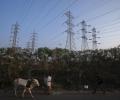
Two years after the Centre's flagship village electrification scheme Saubhagya concluded with the government claiming 99.9 per cent success, several states have added close to 1.1 million rural households that remain to be connected to the electricity grid. This new list includes earlier unwilling households that have now agreed to have a metered connection and also those built or discovered in the states' surveys since 2019. Assam and Uttar Pradesh are the states that have the majority of such new additions.
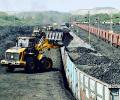
Eleven bidders, including Adani Enterprises, have shown interest in the first-ever coal import tender issued by national miner Coal India (CIL). Recently, state-owned NTPC awarded 6.25 million tonnes (mt) of imported coal tender worth Rs 8,300 crore to Adani Enterprises. CIL, in a public statement on Tuesday, said: "The prominent Indian agencies among them (11 coal importers) were Adani Enterprises, Mohit Minerals, and Chettinad Logistics. "A couple of coal exporting agencies from abroad, including one from Indonesia, have also shown interest," it said.
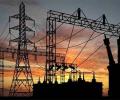
With the cooling down of heatwaves as the monsoon spreads across the country, power demand has fallen by 12.5 per cent from the start of this month till Monday. Peak power demand of the country had touched a record of 210 Gw last week, mostly due to rising temperatures and opening up of the economy. Compared with the beginning of this month, almost all states have seen a fall in power demand. Punjab, however, is an exception where the power demand on Monday was 17 per cent higher than on June 1.

Even as Union ministers allay misgivings over Agnipath, figures show a meagre 2.4 per cent of the ex-servicemen who applied for a government job could get one as the Centre and the states have been unable to recruit against the reserved quotas. Public sector undertakings (PSUs), ministries, and officials of Sainik Boards have blamed it on the lack of skill among ex-servicemen. They say veterans' inability to qualify in selection exams is one of reasons for this. Also, non-recognition of qualifications obtained from the military are reasons why their recruitment has remained significantly low, pushing them towards low-skill jobs.
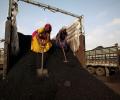
Coal production by Coal India (CIL) has grown slower than the captive mines, awarded over the last six years. During 2020-22, production from the captive mines jumped by 38.5 per cent while CIL saw a tepid growth of 3.4 per cent, according to government data. In terms of dispatch to the power sector, captive mines have raced ahead, witnessing a growth of 72 per cent compared to 15 per cent for CIL. For the current fiscal year, CIL's production is expected to be around 565 million tonnes.

The Union ministry of coal, while acknowledging that domestic coal stock is not enough to meet the power demand, asked state governments and the power generating companies (gencos) to import coal before monsoon season sets in. The ministry has warned the gencos if they do not import coal for 10 per cent blending in their fuel demand by the end of this month, blending benchmark would be increased to 15 per cent. The order pertains to all - central, state and independent power producers (IPPs)/privately owned units.

India's traditional companies are now moving full scale into the renewable and alternative energy space that had been dominated by smaller players over the past decade. Companies such as government-owned NTPC and the Adani and the Tata groups restructured their businesses well in time to become major players in the green space. At the same time, other conventional companies, such as Larsen & Toubro and Reliance Industries Ltd (RIL), which have a presence both in the energy sector as well as myriad other activities - construction, technology and retailing - are tying up with new-age companies to hitch a ride to a greener path.

Tata Group is in discussions with some major international companies, including those from Taiwan, for its foray into the semiconductor chip business. The Union government had earlier tried to bring in Taiwanese manufacturers Taiwan Semiconductor Manufacturing Company (TSMC) and United Microelectronics Corporation (UMC) for chip manufacturing in India. A person close to the development said the Tatas have now opened a separate channel for a possible tie-up. Currently, India mostly imports chips, which are fabricated and assembled to put into various applications, including automobiles, renewable power, mobile phones, televisions, and other electronic items.

China on Tuesday announced a major policy change for its crisis-ridden power sector by allowing coal-fired power plants to charge their industrial and commercial customers market-driven prices. The National Development and Reform Commission (NDRC) of China said the electricity generated by coal-fired plants would discover price in market trading "in an orderly manner" from October 15. This is being done to pass on the high costs of coal and is being held up as the boldest reform in the Chinese power sector.
As the Centre pushes reforms in the power sector, especially for the beleaguered electricity distribution segment, several states, especially those ruled by Opposition parties, are clamouring against it. Maharashtra, West Bengal, Tamil Nadu, and Kerela have voiced their reservations against the proposed amendments to the Electricity Act, 2003. The irony is the states opposing the amendments on the ground of threat of privatisation already have private partnerships in power supply. The proposed Bill was slated to be placed on the floor of Parliament in the Monsoon session. But it still awaits Cabinet approval amid several states complaining that they have been not consulted on the issue.
.jpg)
The Union government's offer of settling the retrospective taxation case with Cairn Energy may hinge on Vedanta withdrawing the ongoing arbitration from the Singapore Tribunal on the same issue. The government has offered to refund Cairn Energy Rs 7,900 crore that it had collected under the retrospective tax demand on fulfilment of certain conditions, including withdrawal of pending litigation and furnishing of an undertaking to the effect that no claim for cost, damages, interest, etc., would be filed. This condition is also part of the Taxation Laws (Amendment) Bill, 2021, passed by Parliament recently.

More than a year of Covid-19 has pushed most businesses into gloom but Reliance Industries Ltd (RIL) managed to reduce its gross debt 25 per cent, enabling it to turn towards its next phase of capital expenditure that has come in the form of a Rs 75,000-crore plan for green energy and power storage. The company managed to stay afloat during the pandemic because of its large presence in the consumer-centric businesses of retail and telecommunication (see chart: "A new Reliance"). These two businesses constituted 45 per cent of its EBITDA during FY21 from 36 per cent in FY20.

The change in leadership at the railway ministry comes at a time when the national transporter is grappling with low passenger earnings even as it is trying to increase freight loading and open up its doors to private investment. Union Minister Ashwini Vaishnaw took charge from Piyush Goyal who got the railway portfolio in 2017 after Prime Minister Narendra Modii dropped Suresh Prabhu from the Union Cabinet. Completing freight corridors, negotiating land for the bullet train, and speeding up monetisation plans would be some of the major focus areas for Vaishnaw.

The Great Indian bustard is at the centre of another impending legal tussle. The government is planning to move the Supreme Court seeking a review of its order that asked Gujarat and Rajasthan to lay transmission lines linked to solar power units underground so as to not pose any threat to the endangered bird. The ministry of new and renewable energy (MNRE) has sought a view from the law ministry and will move the court basing its arguments on estimates showing that the bird's population was declining even before solar power plants came to the region, said a senior government official requesting anonymity.

Energy's exit is a cautionary tale for several foreign investors in India as close to 16 Gw of solar and wind power projects languish without any power purchase agreement, 24 Gw without transmission connectivity and around 2 Gw unilaterally cancelled by project developers.

It looks unlikely that a proper plan was in place or else the deaths could have been averted, reports Jyoti Mukul.
 © 2025 Rediff.com - Investor Information - Advertise with us - Disclaimer - Privacy Policy - Sitemap - Feedback - About us - Terms of use - Grievances